Shoulder injuries after a fall are among the most common reasons patients visit an orthopedic surgeon. The shoulder is a remarkably mobile joint, and that same mobility can leave it vulnerable when the body absorbs a sudden impact. Whether you slipped on ice, tripped over uneven ground, or took a tumble during a recreational activity, the pain that follows can range from a dull ache to something more severe. In this post, we’ll walk you through the most common shoulder injuries after a fall, how they’re diagnosed, what treatment may look like, and what you can generally expect during recovery.
Key Takeaways
- Shoulder injuries after a fall can involve bones, tendons, ligaments, or cartilage (and sometimes more than one structure at the same time).
- The severity of the injury may not always match the level of pain you feel immediately after the fall. Some serious injuries can initially present with surprisingly manageable discomfort.
- Treatment ranges from conservative approaches such as rest, physical therapy, and medication to surgical options when the injury warrants it.
What Happens to Your Shoulder During a Fall
When you fall, your body’s instinct is to catch itself. Many people reach out with an arm or land directly on the shoulder. That split-second reaction can channel force through the shoulder complex.
The shoulder is a system of bones, muscles, tendons, and ligaments working together to provide an extraordinary range of motion. The main ball-and-socket joint, called the glenohumeral joint, connects the upper arm bone to a shallow socket on the shoulder blade. Above that sits the acromioclavicular joint, where the collarbone meets the shoulder blade. The rotator cuff, a group of four muscles and tendons, wraps around the ball to keep it centered in the socket. Cartilage and a ring of tissue called the labrum add stability.
A fall can injure any of these structures. The specific injury depends on how you landed, the force involved, and your underlying bone and tissue health. Some people sustain more than one injury in the same fall.
The Most Common Shoulder Injuries Following a Fall
Shoulder Fractures
Fractures are one of the most frequent shoulder injuries after a fall. Three bones can potentially break depending on how you land.
Proximal humerus fractures affect the upper portion of the arm bone, near the ball of the joint. These fractures tend to occur more often in older adults, particularly those with lower bone density. Some proximal humerus fractures are non-displaced, meaning the bone fragments remain in relatively good alignment. Non-displaced fractures may respond well to conservative treatment. However, displaced or multi-part fractures sometimes require surgical intervention to restore the anatomy of the joint.
Clavicle fractures involve the collarbone and are common in falls where the person lands directly on the shoulder. Patients usually notice visible swelling or even a bump along the collarbone. Many clavicle fractures can heal with a sling and time, though fractures that are significantly displaced may benefit from surgical fixation.
Scapula fractures are less common because the shoulder blade is well-protected by surrounding muscle. When they do occur, they usually result from high-energy impacts. Treatment depends on the location of the fracture and whether it extends into the joint surface.
Rotator Cuff Tears
The rotator cuff can tear when the arm absorbs a sudden, forceful load during a fall. In younger patients, this type of injury often involves a healthy tendon that tears acutely due to trauma. In older adults, however, the tendons may already show some degree of age-related wear. A fall can turn a partial, asymptomatic tear into a full-thickness tear that produces pain and weakness.
Patients with a rotator cuff tear may describe difficulty lifting the arm, weakness when reaching overhead, and pain that worsens at night. The size and location of the tear, along with the patient’s activity level, typically guide treatment. Smaller tears may respond to physical therapy, while larger tears may be treated with surgical repair.
Shoulder Dislocations and Instability
A shoulder dislocation occurs when the ball of the humerus is forced out of the socket. The shoulder most commonly dislocates in a forward direction, known as an anterior dislocation. The event is typically very painful, and the shoulder may look visibly deformed.
After reduction (where a doctor positions the shoulder back into place), imaging may be performed to check for associated injuries. Dislocations can stretch or tear the labrum, the capsule, and even the rotator cuff. These associated injuries can lead to recurrent instability, a condition where the shoulder dislocates again with less force.
Labral Tears
The labrum is a ring of cartilage that lines the rim of the shoulder socket. It deepens the socket and helps keep the ball in place. A fall can tear the labrum, especially when combined with a dislocation event. One well-known type of labral tear is the SLAP tear, which affects the top of the labrum where the biceps tendon attaches.
Labral tears can cause a clicking or catching sensation in the shoulder. Patients may also experience a feeling of looseness or instability. Depending on the type and severity, treatment may include physical therapy to strengthen the surrounding muscles or arthroscopic surgery to repair the torn tissue.
AC Joint Injuries (Shoulder Separations)
A shoulder separation is distinct from a dislocation. This injury affects the acromioclavicular joint at the top of the shoulder, where the collarbone meets the shoulder blade. A direct fall onto the point of the shoulder can sprain or completely tear the ligaments that stabilize this joint.
AC joint injuries can be graded from mild sprains to complete separations. Lower-grade injuries often respond well to rest, ice, and a sling. Higher-grade separations may be treated with surgical reconstruction, particularly in active individuals or overhead athletes.
How Your Doctor Diagnoses Shoulder Injuries After a Fall
The diagnostic process typically starts with a conversation. Your doctor may ask you to describe how the fall happened, where the pain is located, and what movements make it worse. These details help guide the physical examination. During the exam, your doctor evaluates the shoulder’s range of motion, strength, and stability. Specific hands-on tests can help identify which structure may be injured.
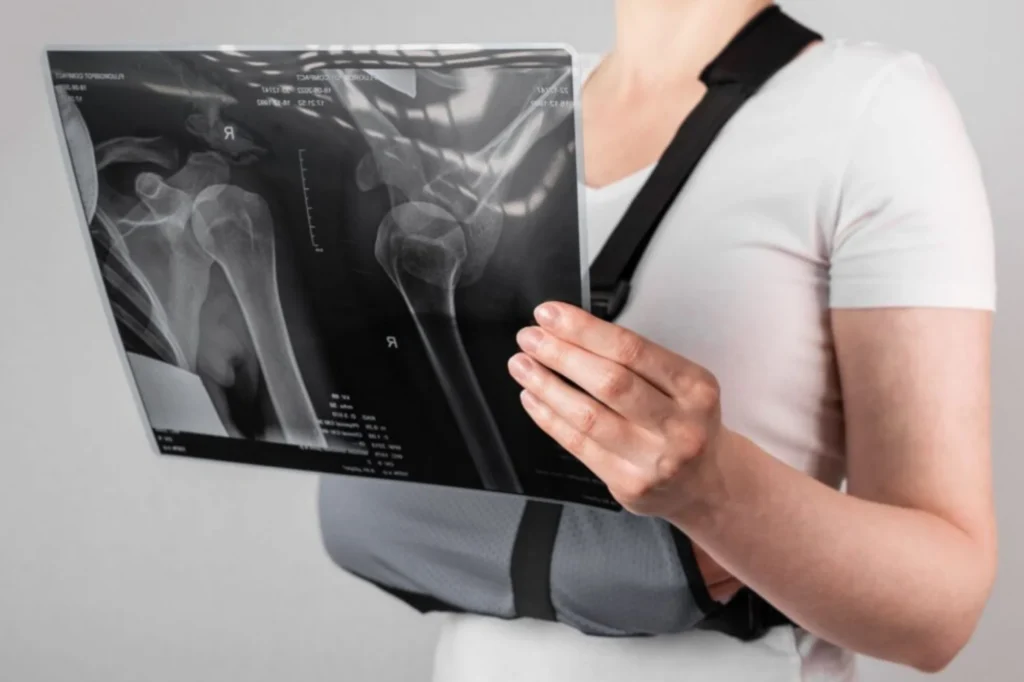
Imaging may also be ordered. X-rays are often the first step, as they can identify fractures and show bone alignment. If a soft tissue injury like a rotator cuff tear or labral tear is suspected, your doctor may order an MRI for detailed views of tendons, muscles, ligaments, and cartilage. In some cases, a CT scan may be helpful for surgical planning when complex fractures are involved.
Not every injury shows up immediately. Swelling and muscle guarding can mask the full extent of the damage right after the fall. If your symptoms persist or worsen despite initial treatment, additional imaging may be warranted.
Treatment Approaches: From Conservative Care to Surgery
Treatment for shoulder injuries after a fall generally follows a stepped approach. The plan depends on the type of injury, its severity, the patient’s age and activity level, and individual recovery goals.
Conservative Treatment
For many shoulder injuries, non-surgical treatment forms the foundation of recovery. Initial management may include rest, ice application, and the use of a sling to immobilize the shoulder. Over-the-counter pain medications such as nonsteroidal anti-inflammatory drugs (NSAIDs) may help manage pain and swelling during the acute phase. Physical therapy may be a core part of the recovery plan. A therapist designs a program to gradually restore range of motion, rebuild strength, and improve function.
Surgical Treatment
When conservative treatment does not provide sufficient improvement, your doctor may discuss surgical options. The exact procedure will depend on the type and severity of the injury.
Surgical treatment may involve repairing damaged tissues, stabilizing the joint, or reconstructing injured structures with the goal of restoring proper alignment and function. In some cases, minimally invasive arthroscopic techniques may be used. For certain complex injuries, shoulder replacement may be considered. The appropriate option depends on several factors, including the condition of the surrounding tissues and the individual’s overall health.
The decision to proceed with surgery is typically made through a shared discussion between the patient and an experienced orthopedic surgeon, taking into account the specific diagnosis, lifestyle needs, medical history, and recovery goals.
Reducing Your Risk of Fall-Related Shoulder Injuries
While not every fall can be prevented, a few practical strategies may reduce your risk. Maintaining overall strength and balance through regular exercise can help your body respond more effectively when you lose your footing.
Simple environmental adjustments can also make a difference: keeping walkways clear, using handrails on stairs, wearing appropriate footwear, and being mindful of wet or icy surfaces. For older adults, a conversation with your doctor about bone health and fall risk assessments may also be valuable.
Summary
Shoulder injuries after a fall can range from mild sprains to complex fractures and tendon tears. The shoulder’s remarkable mobility comes with a trade-off: it is susceptible to a wide range of injuries when it absorbs the force of a fall. Common injuries include fractures of the humerus, clavicle, or scapula, rotator cuff tears, dislocations, labral tears, and AC joint separations. Accurate diagnosis may involve a physical examination paired with imaging studies. Treatment typically follows a personalized approach, usually beginning with conservative measures like rest, medication, and physical therapy, and advancing to surgical options when needed.
Frequently Asked Questions
What are the most common shoulder injuries after a fall?
The most frequently seen injuries include proximal humerus fractures, clavicle fractures, rotator cuff tears, shoulder dislocations, labral tears, and AC joint separations. The specific injury depends on how you landed, the force of the impact, and the condition of your bones and soft tissues.
Can a shoulder injury from a fall heal on its own?
Some injuries, particularly non-displaced fractures and lower-grade AC joint sprains, may heal with conservative treatment such as rest, a sling, and physical therapy. However, injuries like complete rotator cuff tears or recurrent dislocations may benefit from surgical intervention.
How long does recovery take after a shoulder injury from a fall?
Recovery timelines vary considerably depending on the type and severity of the injury, whether surgery was performed, and the patient’s overall health. Minor injuries may improve over a few weeks, while more complex injuries can take several months or longer. Your shoulder specialist can help set realistic expectations.