
Carpal Tunnel Surgery Sunnyvale, TX
Jeff Zhao, DO | Eastern Dallas' Orthopedic Surgeon
Carpal Tunnel Surgery Sunnyvale, TX
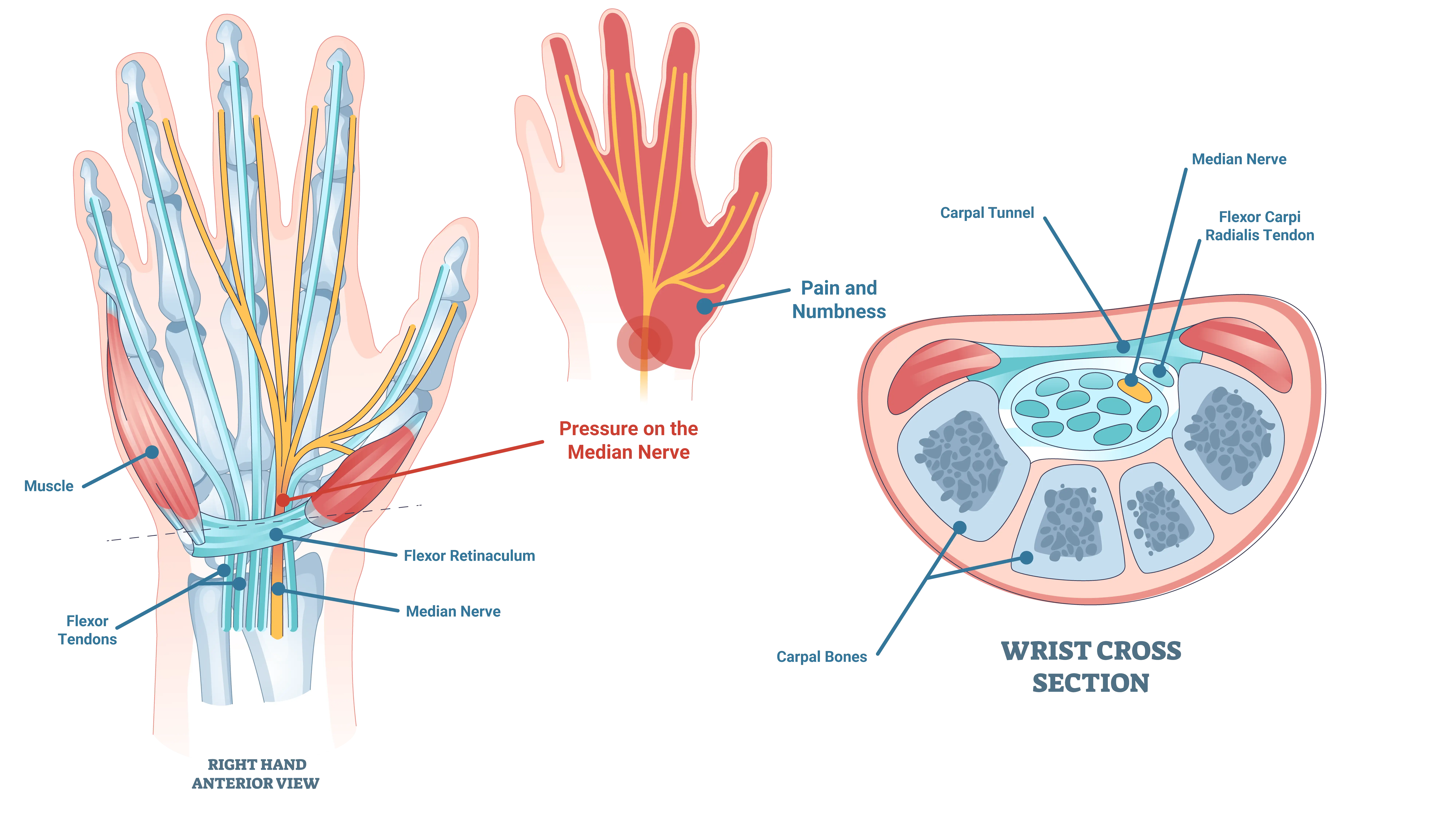
Carpal tunnel syndrome occurs when the median nerve becomes compressed as it passes through the carpal tunnel in the wrist. This pressure can cause numbness, tingling, pain, and weakness in the hand, often interfering with daily activities and sleep.
Dr. Jeff Zhao provides comprehensive evaluation and treatment for carpal tunnel syndrome at Dallas Orthopedic and Shoulder Institute in Sunnyvale, TX. With advanced fellowship training in upper extremity surgery, Dr. Zhao emphasizes precise diagnosis and individualized treatment plans tailored to each patient’s functional goals. He offers both endoscopic carpal tunnel release and traditional open decompression, depending on what is most appropriate for the patient.
Understanding Carpal Tunnel Anatomy
The carpal tunnel is a narrow passageway in the wrist formed by carpal bones on three sides and the transverse carpal ligament on the palm side. Inside the tunnel run the median nerve and nine flexor tendons responsible for finger movement.
When swelling or structural changes reduce the available space within the tunnel, pressure builds on the median nerve. This compression disrupts normal nerve function and produces the symptoms associated with carpal tunnel syndrome.
The median nerve supplies sensation to the thumb, index finger, middle finger, and the thumb side of the ring finger. It also controls the muscles at the base of the thumb that allow for fine motor control and grip strength. During surgery, the transverse carpal ligament is carefully released to relieve pressure on the nerve.
Signs and Symptoms of Carpal Tunnel Syndrome
Patients with carpal tunnel syndrome commonly experience numbness and tingling in the thumb and fingers, particularly at night. These sensations may wake patients from sleep and temporarily improve with shaking or repositioning the hand. As the condition progresses, weakness can develop, making it difficult to grip objects, perform fine motor tasks, or maintain hand endurance throughout the day.
Pain may extend into the forearm and, in some cases, toward the elbow or shoulder. The little finger is typically unaffected, as it is supplied by a different nerve. Symptoms often begin intermittently but may become constant if nerve compression is not addressed.
Treatment Options
Non-Surgical Treatment for Carpal Tunnel Syndrome
For mild to moderate symptoms, non-surgical treatment is often the first step. Wrist splinting, particularly at night, helps keep the wrist in a neutral position and reduces pressure on the median nerve during sleep. Activity modification can limit repetitive or aggravating motions that contribute to inflammation.
Anti-inflammatory medications may provide temporary relief, while corticosteroid injections can reduce swelling within the carpal tunnel and improve symptoms for some patients. Injection therapy may also help confirm the diagnosis by identifying the median nerve as the source of symptoms.
Carpal Tunnel Release Surgery Options
When conservative treatment no longer provides adequate relief, carpal tunnel release surgery may be recommended. The procedure works by dividing the transverse carpal ligament, increasing space within the tunnel and relieving pressure on the median nerve.
Traditional open carpal tunnel release uses a small incision in the palm, allowing direct visualization of the ligament and surrounding structures. Endoscopic carpal tunnel release is performed through small incisions using a camera and specialized instruments, minimizing tissue disruption and reducing palm scarring. Dr. Zhao determines the most appropriate approach based on each patient’s anatomy, symptoms, and functional needs.
Carpal tunnel release surgery is performed under local anesthesia with sedation or regional anesthesia. Care is taken to protect surrounding nerves and blood vessels throughout the procedure.
Recovery After Surgery
Recovery following carpal tunnel release is gradual and focused on restoring hand function. Gentle finger movement begins shortly after surgery to prevent stiffness and promote circulation. Most patients resume light activities within days, with a return to more demanding tasks over the following weeks.
Grip strength and sensation improve progressively as the median nerve heals. Some residual numbness or tingling may persist temporarily, particularly in cases of long-standing nerve compression. Follow-up visits allow healing and recovery to be monitored closely.
Schedule a Consultation
Carpal tunnel syndrome is a common condition that can significantly impact hand function, comfort, and quality of life when left untreated. Early evaluation and appropriate treatment are essential to relieving nerve compression and preventing long-term damage.
Dr. Jeff Zhao is a fellowship-trained orthopedic surgeon with advanced expertise in upper extremity and hand surgery, offering both minimally invasive endoscopic techniques and traditional open carpal tunnel release when indicated. His approach emphasizes accurate diagnosis, individualized care, and surgical precision to help patients regain strength, sensation, and confidence in their hands.
If you are experiencing persistent numbness, tingling, or hand weakness, schedule a consultation today to explore treatment options and take the first step toward lasting relief.