
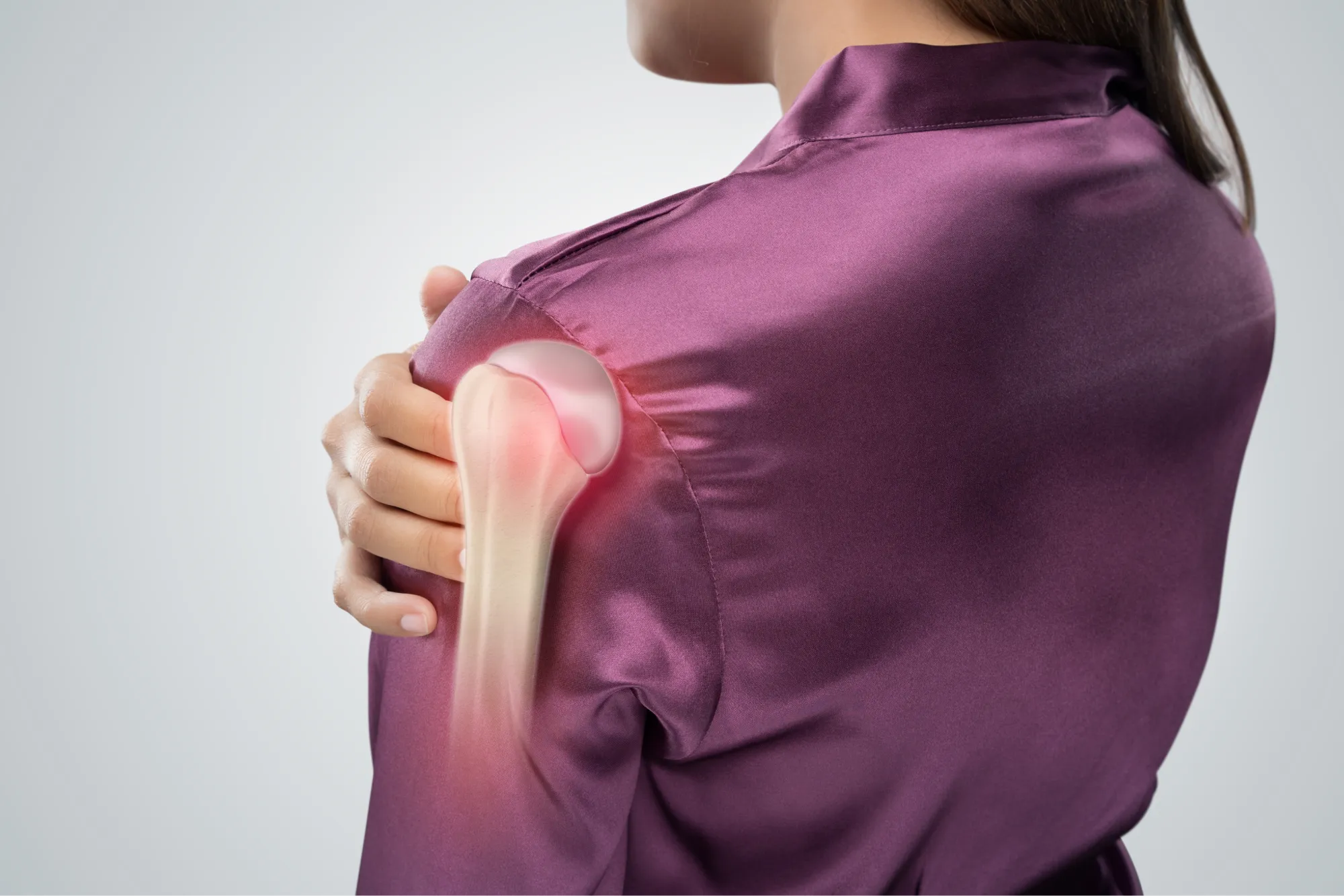
Frozen shoulder, medically known as adhesive capsulitis, is a condition that can cause stiffness and pain. Patients often come in confused, wondering why their shoulder gradually locked up without any clear injury. In this post, we’ll explore the causes of frozen shoulder, explain what’s happening inside the joint, and outline the treatment options that may help you get your mobility back.
Key Takeaways
- Frozen shoulder involves a progressive tightening of the joint capsule that can severely limit your range of motion and cause significant pain.
- The condition typically moves through three stages (freezing, frozen, and thawing) and may last anywhere from one to three years, though every patient’s timeline can look different.
- Certain factors like diabetes, thyroid disorders, and prolonged immobilization may increase your risk of developing frozen shoulder.
- Treatment often starts with conservative approaches like physical therapy, medications, and injections. In some cases, surgical options may be considered.
What Is Frozen Shoulder?
To understand frozen shoulder, it helps to know a little about the shoulder’s anatomy. Your shoulder joint is surrounded by a capsule of connective tissue. This capsule normally allows the joint to move freely in multiple directions. With frozen shoulder, the capsule becomes inflamed and gradually thickens. Over time, bands of scar tissue called adhesions form within the capsule, and the available space inside the joint shrinks.
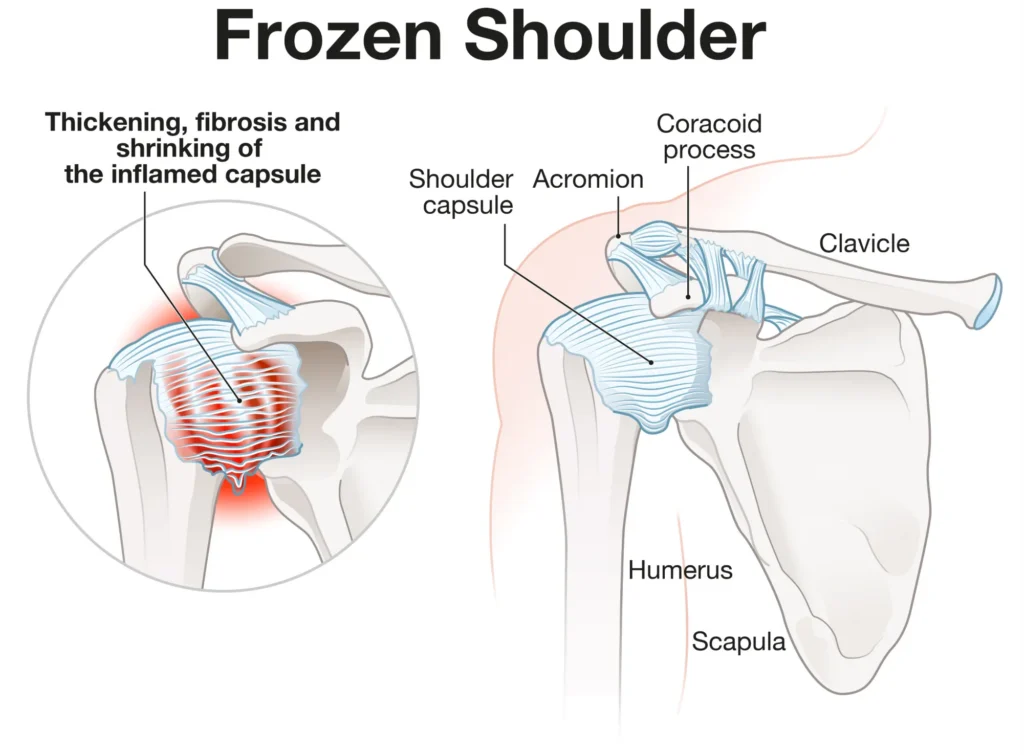
The result is a shoulder that progressively loses range of motion. Simple tasks, such as reaching for a cabinet, fastening a seatbelt, or even getting dressed, can become genuinely difficult. The stiffness and pain tend to develop slowly. Many patients don’t seek help right away because they assume the discomfort will pass on its own.
The Three Stages of Frozen Shoulder
Frozen shoulder generally progresses through three distinct stages. Understanding where you are in this process can help set realistic expectations for recovery.
Stage 1: Freezing
The freezing stage is frequently the most painful phase. During this period, you’ll likely notice a gradual increase in shoulder pain. The pain tends to worsen at night and may disrupt your sleep. Range of motion starts to decline, but pain is usually the dominant symptom at this point. Many patients describe a deep, aching discomfort that seems to come out of nowhere.
Stage 2: Frozen
During the frozen stage, the pain may begin to lessen somewhat. However, stiffness typically becomes much more pronounced. You may find it very difficult to move the shoulder in any direction. Activities that require reaching overhead or behind your back become particularly challenging. The shoulder essentially feels “stuck.”
Stage 3: Thawing
The thawing stage is the recovery phase. Range of motion gradually begins to return, and pain continues to diminish. This stage can take six months to two years or even longer in some cases. The pace of recovery varies quite a bit from person to person. Some patients regain nearly full motion, while others may retain some degree of lasting stiffness.
Causes and Risk Factors for Frozen Shoulder
The exact cause of frozen shoulder isn’t fully understood, and that’s one of the most frustrating aspects of this condition for both patients and doctors. We know the capsule becomes inflamed and scarred, but the underlying trigger isn’t always clear. That said, research has identified several factors that appear to increase the risk.
Diabetes
Individuals with diabetes face a higher risk of developing frozen shoulder. The connection isn’t entirely understood, but it may be related to how elevated blood sugar levels affect connective tissues over time.
Thyroid Disorders
Both hypothyroidism and hyperthyroidism have been linked to an increased risk of frozen shoulder. If you have a thyroid condition and notice shoulder stiffness developing, it’s worth bringing it up with your doctor sooner rather than later.
Prolonged Immobilization
One of the more well-documented causes of frozen shoulder is a period of reduced shoulder movement. This might happen after a surgery, a fracture, a rotator cuff injury, or even a stroke. When the shoulder stays still for an extended period, the capsule can begin to tighten. This is one reason why doctors and physical therapists emphasize early, gentle motion after shoulder procedures whenever it’s safe to do so.
Age and Gender
Frozen shoulder most commonly affects adults between the ages of 40 and 60. It also appears to be more common in women than men, though the reasons for this aren’t entirely clear. Hormonal factors may play a role, but more research is needed to understand the connection fully.
Other Medical Conditions
Conditions like heart disease, Parkinson’s disease, and certain autoimmune disorders have also been associated with a higher incidence of frozen shoulder. If you have one or more of these conditions and begin noticing shoulder stiffness, an early evaluation may be beneficial.
How Is Frozen Shoulder Diagnosed?
Diagnosing frozen shoulder typically begins with a thorough conversation about your symptoms and medical history. I’ll want to know when the stiffness and pain started, whether there was any injury or surgery beforehand, and how the symptoms have changed over time.
The physical exam is a key part of the process. During the exam, I’ll check both your active range of motion (how far you can move the shoulder on your own) and your passive range of motion (how far I can move it for you). With frozen shoulder, both active and passive motion are typically limited, and that’s one of the distinguishing features of this condition compared to other shoulder problems like rotator cuff tears, where passive motion may still be relatively preserved.
Imaging studies like X-rays may be ordered to rule out other potential causes of shoulder pain, such as arthritis or fractures. In some cases, an MRI might be recommended to evaluate the soft tissues around the joint.
Treatment Options for Frozen Shoulder
The treatment approach for frozen shoulder depends on where you are in the disease process, how severe your symptoms are, and how you’re responding to initial measures. In many cases, we start with conservative treatments and escalate only if needed.
Physical Therapy
Physical therapy is often a component of frozen shoulder treatment. A physical therapist can guide you through stretching and range-of-motion exercises designed to gradually loosen the capsule. The key word here is gradual. Overly aggressive stretching during the freezing phase may actually worsen pain and inflammation. A thoughtful, progressive approach may support better results.
Medications
Over-the-counter anti-inflammatory medications like ibuprofen or naproxen may help manage pain and reduce inflammation, especially during the early freezing stage. These medications may help provide relief, but they’re typically used as part of a broader treatment plan rather than as a standalone solution.
Corticosteroid Injections
A corticosteroid injection directly into the shoulder joint may provide temporary pain relief, particularly during the freezing phase when pain is at its peak. By reducing inflammation inside the capsule, the injection may also make it easier to participate in physical therapy.
Hydrodilatation
Hydrodilatation, sometimes called distension arthrography, involves injecting a large volume of sterile fluid into the shoulder joint. The goal is to stretch and expand the tightened capsule. This procedure is sometimes performed under imaging guidance.
Manipulation Under Anesthesia
If conservative treatments haven’t produced sufficient improvement after several months, manipulation under anesthesia may be considered. During this procedure, you’re placed under general anesthesia so that your muscles are completely relaxed. Your surgeon then carefully moves the shoulder through its range of motion, breaking up the adhesions that are restricting movement.
Arthroscopic Capsular Release
For cases where other approaches have not provided adequate relief, arthroscopic capsular release may be recommended. This is a minimally invasive surgical procedure in which a small camera and instruments are inserted into the shoulder joint through tiny incisions. The surgeon uses these tools to carefully cut through the tightened portions of the capsule, releasing the scar tissue that’s limiting motion.
Summary
The causes of frozen shoulder range from underlying medical conditions like diabetes and thyroid disorders to prolonged periods of immobility, and sometimes no clear cause is identified at all. Treatment options for frozen shoulder span a wide spectrum, from physical therapy and medications to corticosteroid injections, manipulation under anesthesia, and arthroscopic capsular release.
Every patient’s journey with frozen shoulder is a little different, and there’s no one-size-fits-all approach. If you’re experiencing shoulder stiffness and pain that isn’t improving, I’d encourage you to reach out to a shoulder specialist to evaluate what’s going on and discuss the best path forward for you.
Frequently Asked Questions
What causes frozen shoulder?
The exact cause of frozen shoulder isn’t always clear. The condition involves inflammation and thickening of the joint capsule, leading to scar tissue formation. Risk factors that may contribute include diabetes, thyroid disorders, prolonged immobilization after surgery or injury, and certain other medical conditions. In some cases, frozen shoulder develops without any identifiable trigger.
Can frozen shoulder go away on its own?
Frozen shoulder may eventually improve on its own over time. However, without treatment, the process can take much longer, and some patients may not fully regain their previous range of motion. Treatment options like physical therapy, injections, and in some cases surgery may help speed up recovery and improve outcomes.
When should I consider surgery for frozen shoulder?
Surgery is typically considered when conservative treatments like physical therapy, medications, and injections have not provided adequate improvement. Procedures like manipulation under anesthesia or arthroscopic capsular release may be recommended to break up scar tissue and restore range of motion. Your doctor can help determine whether surgical intervention is the right step based on your specific situation.