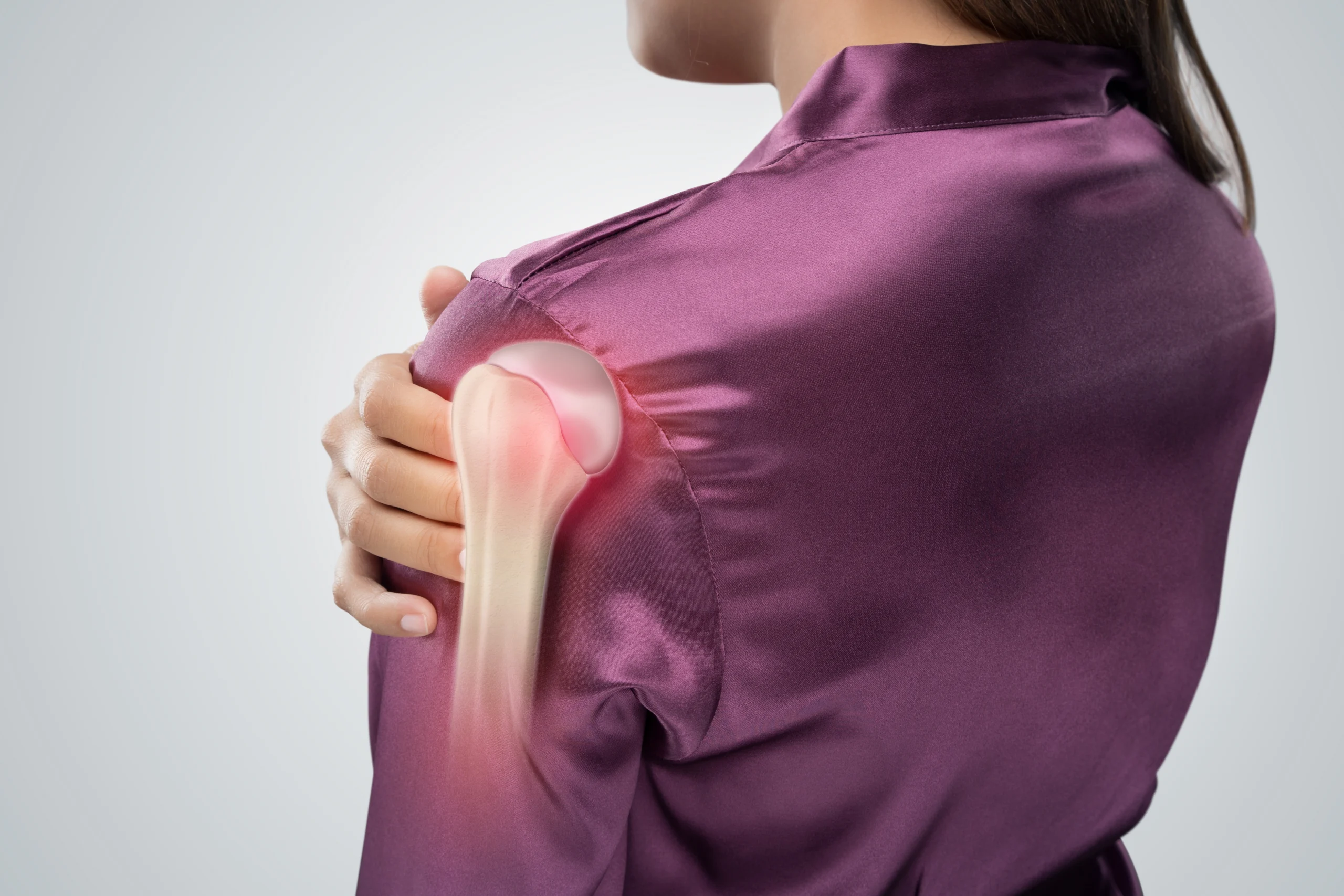

If you’ve ever reached overhead and felt a sudden, sharp pain, or noticed your shoulder aching more and more over the months, a rotator cuff tear may be the cause. Understanding a rotator cuff tear, including its symptoms, diagnosis, and treatment options, can make a real difference in how you approach your care and your recovery. In this post, we’ll review everything from what the rotator cuff actually does to what your treatment path might look like.
Key Takeaways
- The rotator cuff is a group of four muscles and tendons that stabilize the shoulder and allow you to lift and rotate your arm.
- Rotator cuff tears can develop gradually over time or occur suddenly from an injury. Both types may cause pain, weakness, and limited motion.
- Many tears may be managed through physical therapy, rest, and medication. When conservative treatment isn’t enough, surgical repair, often arthroscopic, may be considered.
What Is the Rotator Cuff?
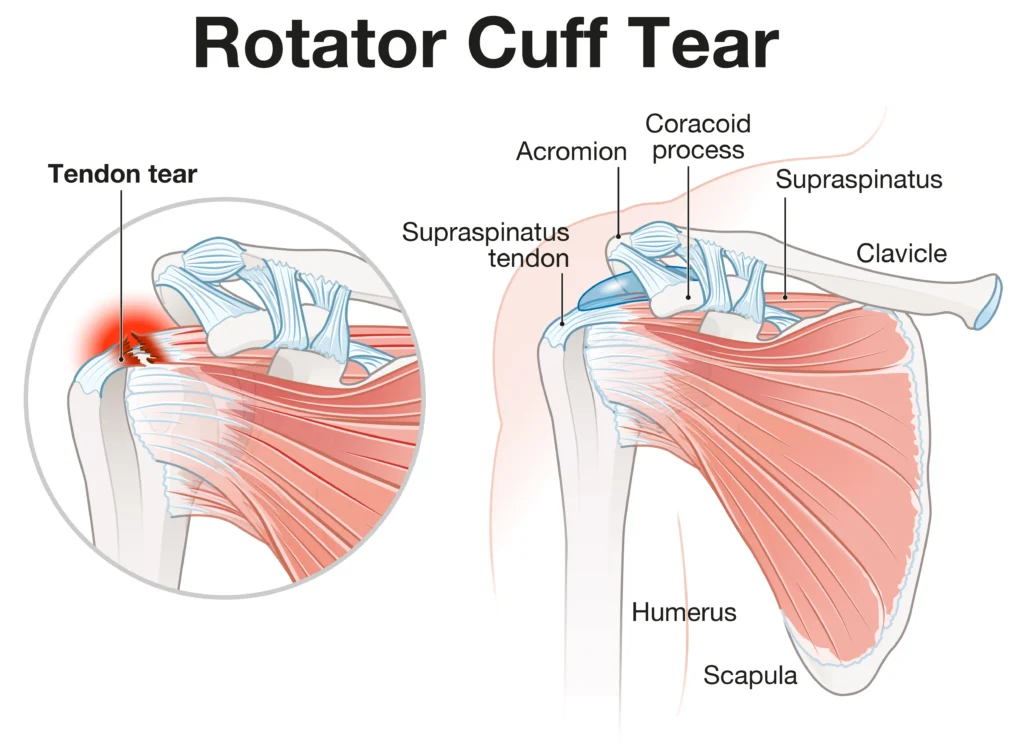
The rotator cuff is made up of four muscles and their attached tendons: the supraspinatus, infraspinatus, teres minor, and subscapularis. Together, they form a sleeve of soft tissue surrounding the ball of the shoulder joint. Their main job is to keep the humeral head (the “ball”) centered within the glenoid (the “socket”), while also enabling a wide range of arm movement.
Every time you lift your arm, reach behind your back, or rotate your shoulder, the rotator cuff is working. When one or more of these tendons tears, either partially or completely, the result can be pain, weakness, and a significant loss of shoulder function.
What Causes a Rotator Cuff Tear?
Rotator cuff tears generally fall into two categories: acute tears and degenerative tears.
Acute tears happen suddenly. They are often the result of a specific event, such as falling on an outstretched arm, lifting something too heavy, or taking a direct blow to the shoulder. These injuries may come with intense pain and noticeable weakness.
Degenerative tears develop slowly over time. As we age, the tendons of the rotator cuff naturally weaken. Repetitive overhead activity, common in certain jobs and sports, can accelerate this breakdown. Over time, a tendon may fray and eventually tear, sometimes without a clear triggering event.
Several factors may increase a person’s risk of developing a rotator cuff tear:
- Age: Degenerative tears become more common after age 40.
- Occupation or sport: Jobs or activities that involve repeated overhead movement may place extra strain on the tendons over time.
- Family history: Some research suggests a possible genetic predisposition to tendon degeneration.
- Prior shoulder problems: A history of shoulder injuries can sometimes make future tears more likely.
- Bone spurs: Bony growths on the underside of the acromion may rub against the tendons.
Symptoms of a Rotator Cuff Tear
The symptoms of a rotator cuff tear can vary quite a bit depending on the size of the tear and how it developed. That said, several signs tend to show up fairly consistently.
A dull, deep ache in the shoulder is often one of the first things patients notice. This ache frequently worsens at night, especially when lying on the affected side. Weakness in the arm is another possible symptom. Patients frequently report difficulty lifting objects, reaching overhead, or rotating the arm. Simple, everyday tasks like fastening a seatbelt, combing your hair, or putting on a jacket can become surprisingly difficult.
Some patients also notice a crackling or grinding sensation (called crepitus) when moving the shoulder. A gradual loss of range of motion is common as well.
It’s worth pointing out that not everyone with a rotator cuff tear experiences obvious pain. Some tears, especially degenerative ones, may develop quietly over time, with weakness being the more prominent complaint. A sudden or large tear, on the other hand, may cause intense pain and even a snapping sensation at the moment of injury.
How Is a Rotator Cuff Tear Diagnosed?
When a patient comes in with shoulder pain, I start with a thorough conversation about their symptoms, including when the pain began, what makes it better or worse, and how it’s affecting daily life. A physical exam follows, during which I assess the shoulder’s range of motion, strength, and the specific location of pain.
From there, I may order one or more imaging studies:
- X-ray: X-rays don’t show soft tissue like tendons, but they can help rule out other causes of shoulder pain, such as bone spurs, fractures, or arthritis. They can also show whether the humeral head has shifted upward, which can be a sign of a large or long-standing tear.
- Ultrasound: A useful, real-time imaging tool that allows us to visualize the tendons in motion.
- MRI (Magnetic Resonance Imaging): This is commonly used to evaluate rotator cuff tears and provides detailed information about the tendons and surrounding structures. An MRI provides a detailed view of the tendon’s condition, including the location and size of the tear, whether it’s partial or full-thickness, and the state of the surrounding muscle tissue.
Based on the findings, the tear may be classified as partial (meaning the tendon is damaged but still has some continuity) or full-thickness (meaning the tendon has torn all the way through). The size of the tear also matters.
Non-Surgical Treatment
For many individuals, depending on the qualities of the tear and individual health factors, non-surgical treatment will be the first approach. However, for some severe tears, surgery may be considered. An experienced shoulder specialist can help guide the most appropriate treatment approach for you.
Rest and Activity Modification
Giving the shoulder time to calm down is an important first step. Temporarily avoiding activities that aggravate your symptoms, especially overhead movements and heavy lifting, may help reduce inflammation.
Physical Therapy
Physical therapy is often a component of non-surgical treatment for rotator cuff tears. A skilled therapist will design a program tailored to your needs, typically focusing on:
- Strengthening the muscles around the shoulder to compensate for the affected tendon
- Restoring flexibility and range of motion
- Correcting movement patterns that may be contributing to pain or strain
Medications
Over-the-counter anti-inflammatory medications may help reduce pain and swelling. Always follow the recommended dosage and check with your doctor if any health conditions might affect whether these medications are appropriate for you.
Surgical Treatment and Recovery
Surgery may be discussed when symptoms persist despite conservative treatment or when the nature of the tear makes non-surgical management less likely to succeed. I generally discuss surgery in situations such as:
- The tear is large, full-thickness, and causing significant pain and weakness
- Conservative treatment over several months has not provided adequate relief
- The patient is relatively young, active, or has high physical demands
- The tear resulted from a sudden injury and needs to be addressed more promptly to prevent further damage
Arthroscopic Repair
Arthroscopic repair is the most common surgical approach for rotator cuff tears today. Using a small camera (arthroscope) and thin instruments inserted through small incisions, I can view the tear directly and reattach the tendon to the bone using sutures and small anchors. This minimally invasive technique is designed to limit disruption to surrounding tissue and may offer certain advantages compared to traditional open surgery, depending on the specific case.
Tendon Transfer or Partial Repair
In cases where the tendon has significantly retracted or the surrounding muscle has atrophied, a full repair may not be possible. Your surgeon may consider a tendon transfer (using a nearby healthy tendon to restore function) or a partial repair to maximize shoulder strength and movement under those circumstances.
Summary
A rotator cuff tear is a common source of shoulder pain and weakness, especially in adults over 40. It can result from a sudden injury or develop gradually over time. Symptoms often include a deep shoulder ache, arm weakness, and difficulty with everyday activities. Diagnosis typically involves a physical exam combined with imaging to assess the severity of the tear and guide treatment.
Many rotator cuff tears respond well to non-surgical care, including physical therapy, rest, and medication. When conservative treatment isn’t sufficient, surgical repair, most commonly performed arthroscopically, may offer a path to restoring strength and function. If shoulder pain or weakness is affecting your daily life, I’d encourage you to schedule an evaluation.
Frequently Asked Questions
What happens if a rotator cuff tear goes untreated?
If left untreated, a rotator cuff tear may progress and worsen. The muscle attached to the torn tendon can atrophy over time, which may limit future treatment options. In some cases, untreated tears may be associated with progressive joint changes over time. Seeking evaluation sooner rather than later may leave more options on the table.
Is surgery always required for a rotator cuff tear?
Not at all. Many patients, particularly those with partial tears or smaller full-thickness tears, experience significant improvement with non-surgical treatment. Physical therapy, rest, and anti-inflammatory medications can be very effective. Surgery tends to be recommended when conservative treatment hasn’t worked after a reasonable trial or when the tear is large and causing significant pain and weakness.
What is the difference between a partial and a full-thickness rotator cuff tear?
A partial tear means the tendon has been damaged but is not completely severed. A full-thickness (or complete) tear means the tendon has torn all the way through, creating a gap in the tissue. Full-thickness tears are generally associated with more pronounced weakness and may be more likely to require surgical repair, though each case is evaluated individually based on the patient’s symptoms, activity level, and imaging findings.