

Medically reviewed by Jeff Zhao, DO | Reviewed May 2026
If you’ve been waking up with a deep, aching shoulder that stiffens up after sitting still for a while, you may be dealing with shoulder arthritis. It’s one of the most common conditions I treat in my Sunnyvale and Kaufman, Texas practices, and I understand how frustrating it can be. Simple things like reaching for a glass, fastening a seatbelt, or sleeping through the night can start to feel like real challenges. So what causes shoulder arthritis, and what are your options when it comes to getting relief? Whether you’re just noticing some early stiffness or you’ve been managing persistent pain for months, understanding this condition is the first step toward finding the right path forward.
Key Takeaways
- Shoulder arthritis develops when the cartilage inside your shoulder joint gradually breaks down, which may lead to bone-on-bone contact.
- Symptoms can include deep, aching pain, morning stiffness, grinding sensations, and progressive loss of shoulder movement.
- Treatment typically starts with conservative approaches like physical therapy, anti-inflammatory medications, and injections.
- When non-surgical options are no longer providing enough relief, shoulder replacement surgery may be considered.
How the Shoulder Joint Works
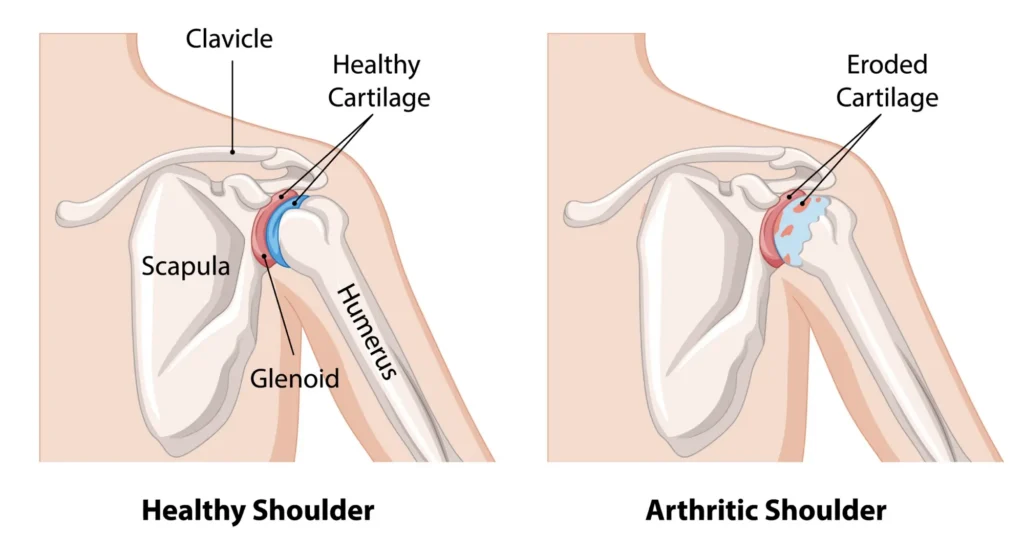
Your shoulder is one of the most mobile joints in the entire body. It functions as a ball-and-socket joint, meaning the rounded top of your upper arm bone (the humerus) fits into a shallow cup-shaped socket in your shoulder blade. This design allows you to raise your arm overhead, reach across your body, and rotate in nearly every direction.
The surfaces of both the ball and the socket are covered in a smooth, resilient tissue called articular cartilage. Think of it as the joint’s natural cushion; it allows the bones to glide smoothly against each other. When that cartilage is healthy, movement feels smooth and pain-free. Surrounding the joint are four tendons and muscles that form the rotator cuff, along with ligaments that hold everything in place. This whole network works together to keep your shoulder stable and functional.
What Causes Shoulder Arthritis?
Shoulder arthritis develops when the articular cartilage covering the joint surfaces gradually breaks down. Over time, this deterioration may lead to bones rubbing directly against each other. That friction is what generates the pain, stiffness, and limited motion that patients often describe.
Osteoarthritis
This is by far the most common form of shoulder arthritis. Osteoarthritis is often called “wear-and-tear” arthritis, and that’s a fairly accurate description. Over many years, the cartilage slowly wears away through the normal stress of daily use. Age is a risk factor. Previous shoulder injuries, repetitive overhead activities, and genetics can all play a role as well.
Rheumatoid Arthritis
Rheumatoid arthritis works differently. Rather than simple mechanical wear, this is an autoimmune condition. The immune system mistakenly attacks the lining of the joint, triggering chronic inflammation that can destroy the cartilage over time. It can affect both shoulders and tends to be more progressive in nature.
Post-Traumatic Arthritis
A previous shoulder injury, such as a severe fracture, a dislocation, or ligament damage, can alter the mechanics of the joint. Even if that injury was treated appropriately at the time, the altered wear patterns can lead to premature cartilage breakdown years later.
Rotator Cuff Tear Arthropathy
This is a specific form of shoulder arthritis that develops alongside a large, long-standing rotator cuff tear. When the rotator cuff is severely damaged over a prolonged period, the humeral head can migrate upward within the joint and wear away the cartilage in an unusual pattern.
Recognizing the Symptoms
Shoulder arthritis tends to build gradually. In my experience, patients often tolerate the early stages for quite some time before seeking help, sometimes because symptoms come and go or because they assume the discomfort is just a normal part of aging. The three symptoms that tend to bring people in are:
- Deep, aching pain that occurs both at rest and with activity. It can radiate down the arm and may be difficult to pinpoint exactly.
- Progressive loss of range of motion, making it increasingly difficult to reach overhead, behind your back, or across your body.
- Night pain that disrupts sleep. Many patients tell me this is actually what finally brought them in; they simply couldn’t get comfortable in bed anymore.
Morning stiffness that loosens up after moving around, grinding or clicking sensations during movement, and weakness with overhead lifting are also common. These symptoms tend to appear together and worsen gradually over time.
Non-Surgical Treatment Options
My first priority is always to explore whether we can manage shoulder arthritis effectively without surgery. For many patients, particularly those with mild to moderate symptoms, conservative treatment can provide meaningful relief and help protect quality of life. I take that seriously. Recommending surgery before we’ve genuinely committed to the non-surgical options isn’t something I do lightly.
Activity Modification
One of the first things I recommend is identifying and reducing activities that consistently aggravate the joint. This doesn’t mean stopping all movement. In fact, staying active is generally beneficial for joint health. It means being thoughtful about which activities are adding unnecessary stress to an already compromised shoulder. We work together to identify those patterns and find better alternatives.
Physical Therapy
Physical therapy usually plays a role in managing shoulder arthritis. A skilled therapist can work on maintaining shoulder mobility and strengthening the surrounding muscles to better support the joint. Strengthening the surrounding muscles may help improve shoulder function and reduce discomfort during daily activities.
Anti-Inflammatory Medications
Over-the-counter NSAIDs (nonsteroidal anti-inflammatory drugs) can help manage pain and reduce inflammation. Topical treatments may also be available. We will discuss the right approach given each patient’s overall health and any other medications they may be taking.
Corticosteroid and Hyaluronic Acid Injections
Corticosteroid injections into the shoulder joint can sometimes provide meaningful short-term relief by reducing inflammation directly within the joint space. For some patients, this relief can allow better participation in physical therapy, which is where lasting benefits often come from. Hyaluronic acid injections aim to supplement the natural fluid within the joint and may reduce friction for certain patients. Both are options we can discuss depending on your specific situation.
When Is Surgery the Right Answer?
There may come a point for patients where pain significantly impacts quality of life and non-surgical management can no longer provide adequate relief. When that threshold is reached, surgery may be discussed. The two primary types of shoulder replacement surgery I perform are total shoulder replacement and reverse shoulder replacement, and the right choice depends on several factors.
Total Shoulder Replacement
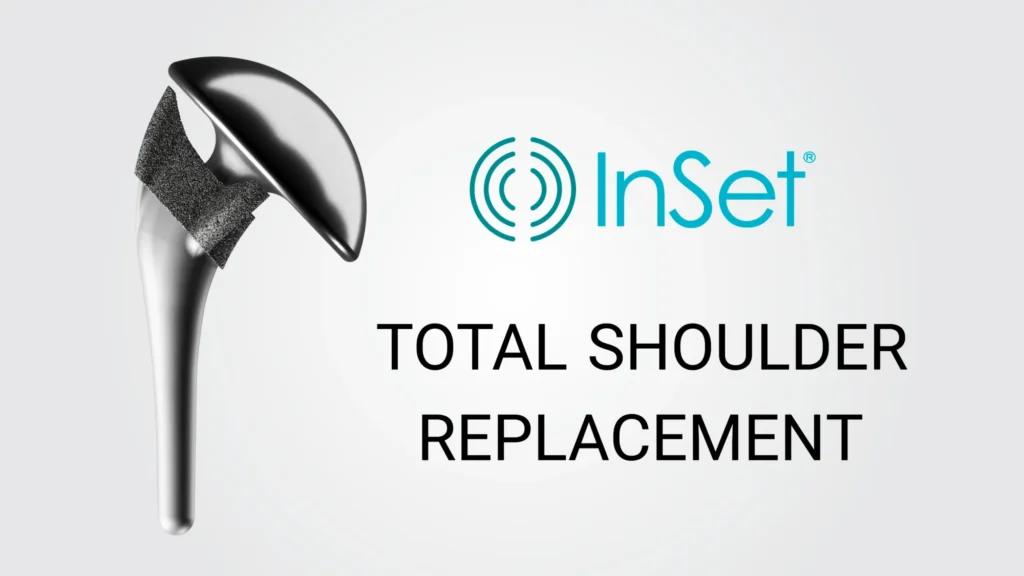
Total shoulder replacement, also called total shoulder arthroplasty, involves removing the damaged joint surfaces and replacing them with smooth artificial components. The humeral head is replaced with a metal ball, and the socket is resurfaced with a durable plastic component. This approach works well for patients with advanced osteoarthritis or rheumatoid arthritis who still have a reasonably intact rotator cuff. The goal is to reduce painful bone-on-bone contact and improve shoulder function and comfort. Most patients notice steady improvement during the first several months following surgery, and recovery can continue for up to a year or longer as strength and endurance rebuild.
Reverse Shoulder Replacement
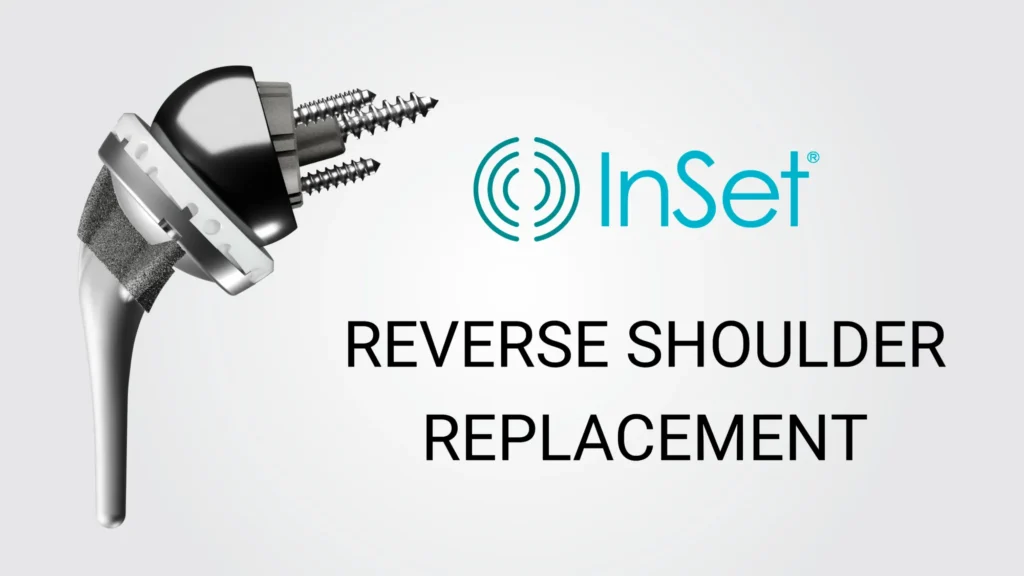
Reverse shoulder replacement is a specialized procedure designed for situations where both significant arthritis and rotator cuff damage are present (rotator cuff tear arthropathy). In this procedure, the ball and socket components are switched. The metal ball attaches to the shoulder blade side, and the plastic socket attaches to the upper arm bone. This design allows the deltoid muscle to take on the stabilizing role that the rotator cuff would normally handle. It can be an effective option for appropriately selected patients.
What to Expect From Recovery
In the early weeks after surgery, the arm rests in a sling to protect the healing tissue. Physical therapy typically begins early, starting with gentle passive movements where the therapist moves the arm for you. This helps prevent stiffness without placing stress on the repair. As healing progresses, you’ll begin moving the arm more actively on your own, and then gradually work up to strengthening exercises.
Many patients are able to resume most activities of daily living within several months, although recovery timelines vary. Maximal recovery generally continues up to a year or longer. I follow up with patients regularly throughout this process, because recovery isn’t one-size-fits-all and I want to make sure your plan adjusts as your progress unfolds.
Summary
Shoulder arthritis is a condition that tends to develop gradually, often through years of cartilage breakdown that eventually results in painful bone-on-bone contact within the joint. The causes vary, from the natural wear of osteoarthritis, to autoimmune damage from rheumatoid arthritis, to structural changes following a previous shoulder injury.
Conservative treatments, including physical therapy, anti-inflammatory medications, and injections, may provide meaningful relief for patients with mild to moderate joint damage. When those approaches are no longer enough, shoulder replacement surgery may help improve function and reduce pain.
If you’ve been dealing with persistent shoulder pain and want to understand what’s causing it and what you can do about it, I’d encourage you to schedule a consultation. Together, we can take a thorough look at what’s happening in your shoulder and put together a plan that fits your goals and your needs.
Frequently Asked Questions
Is shoulder arthritis the same as a rotator cuff tear?
No, these are different conditions, though they can occur together. Shoulder arthritis involves cartilage breakdown within the joint. A rotator cuff tear involves damage to the tendons surrounding the joint. That said, a large, long-standing rotator cuff tear can contribute to a specific form of shoulder arthritis called rotator cuff tear arthropathy.
How do I know if I need shoulder replacement surgery?
Shoulder replacement is typically considered when pain is affecting your quality of life and conservative treatments are no longer providing adequate relief. The decision is always individualized. I evaluate each patient carefully, taking into account imaging findings, rotator cuff condition, overall health, and personal goals before recommending surgery.
What’s the difference between total and reverse shoulder replacement?
Total shoulder replacement works best when the rotator cuff is still reasonably intact, replacing the damaged joint surfaces with anatomic components. Reverse shoulder replacement switches the position of the ball and socket, allowing the deltoid muscle to compensate for a severely damaged or absent rotator cuff. Your surgeon will help determine which approach is most appropriate based on your individual anatomy and diagnosis.