Reverse Shoulder Replacement
Jeff Zhao, DO | Eastern Dallas' Orthopedic Surgeon
Reverse Shoulder Replacement
Chronic shoulder pain and loss of function can greatly impact daily life. In some patients, a traditional total shoulder replacement may not be effective, particularly when the rotator cuff tendons are severely damaged or no longer functional. For these situations, a surgical option known as reverse shoulder replacement, or reverse total shoulder arthroplasty, may be considered.
This procedure “reverses” the natural ball-and-socket structure of the shoulder joint. By doing so, it allows the deltoid muscle to compensate for a deficient rotator cuff. The goal is to reduce pain and meaningfully improve shoulder function.
Understanding the Reverse Shoulder Replacement
The healthy shoulder relies on a relationship between the ball of the upper arm (humeral head) and the socket of the shoulder blade (glenoid). A group of four key muscles and their tendons, the rotator cuff, stabilize the joint and help control lifting and rotation.
In a normal shoulder, the rotator cuff keeps the humeral head centered within the glenoid socket. When one or more of these tendons suffer a massive, irreparable tear, this stability is lost. The humeral head can migrate upward and begin to contact the underside of the acromion (a bony part of the shoulder blade). Over time, this irregular movement can lead to a specific pattern of arthritis known as cuff tear arthropathy (CTA).
A standard total shoulder replacement depends on an intact rotator cuff to function properly. Without that support, patients may continue to experience weakness and limited mobility. The reverse total shoulder replacement was designed to address this biomechanical challenge.
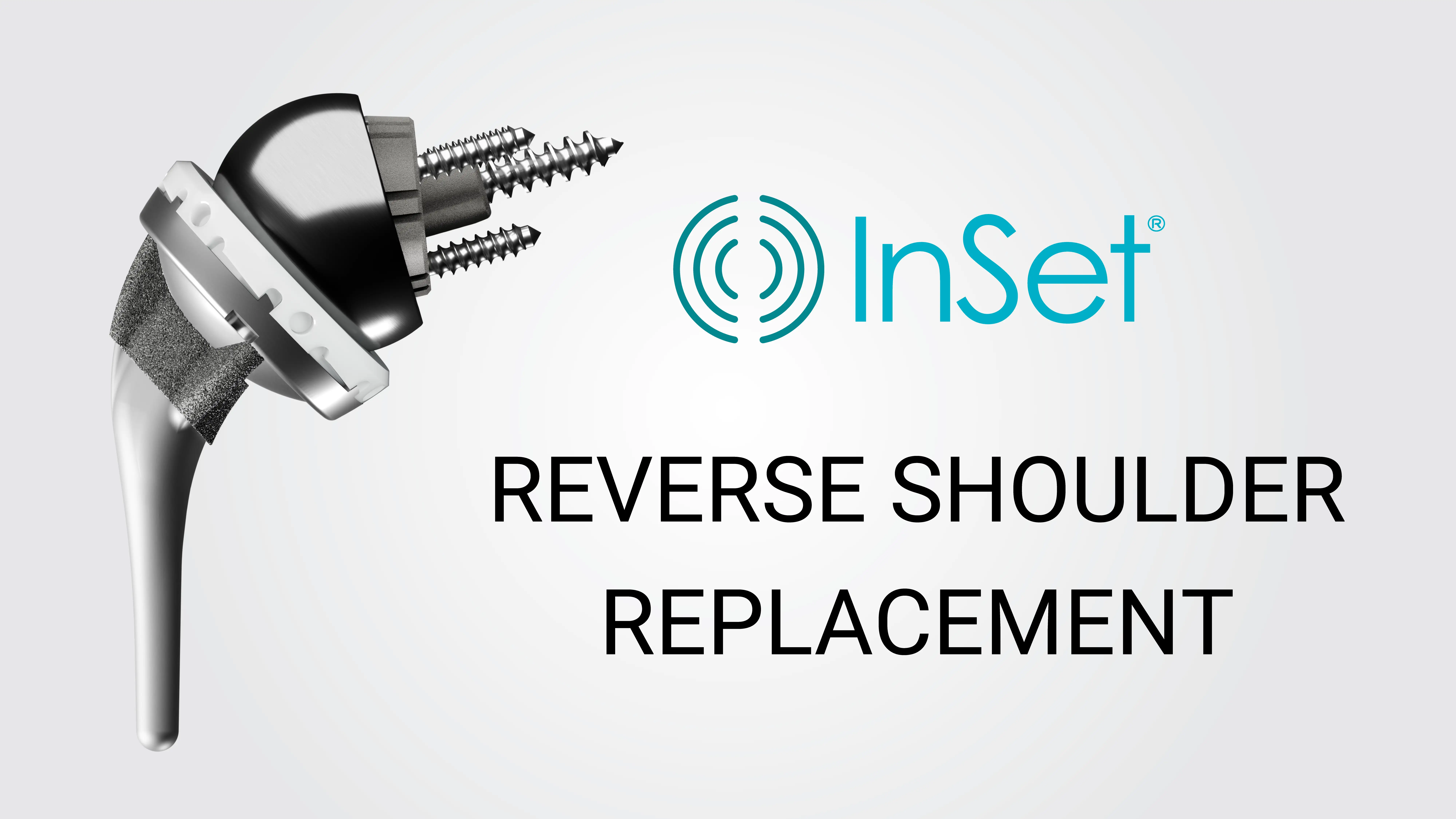
During this procedure, the surgeon places a metal ball on the glenoid side of the joint and a plastic socket on the humeral side, the opposite of the shoulder’s natural arrangement. This configuration shifts the center of rotation downward and inward, giving the deltoid muscle improved mechanical advantage. With this new leverage, the deltoid can lift the arm even when the rotator cuff is not functioning, helping restore mobility and reduce pain.
When Is Reverse Total Shoulder Replacement Recommended?
The most common indication for a reverse total shoulder replacement is cuff tear arthropathy (CTA). This condition involves both an irreparable rotator cuff tear and degeneration of the shoulder joint.
Other situations in which a reverse total shoulder replacement may be considered include:
- Revision Shoulder Surgery: A reverse shoulder replacement may be recommended when a previous shoulder procedure no longer functions effectively. This can occur when the rotator cuff deteriorates over time or when instability or component loosening develops. The reverse design may provide more reliable stability in these revision cases.
- Complex Proximal Humerus Fractures: Some severe fractures of the upper arm bone, especially in older adults with low bone density, are not well-suited for surgical fixation with plates or screws. In these instances, a reverse replacement may be recommended.
Most patients undergo a course of non-surgical management, such as physical therapy, injections, and anti-inflammatory medications, before surgery is considered. When these treatments are no longer effective, a specialist may recommend a reverse total shoulder replacement.
The Reverse Total Shoulder Replacement Procedure
The reverse shoulder replacement procedure is typically performed under general anesthesia. A regional nerve block is often used, which provides pain control immediately after the operation.
During the procedure, the surgeon makes an incision over the front of the shoulder. They carefully navigate around the deltoid muscle. The damaged humeral head is removed. The glenoid socket is prepared to receive the new components. The “ball” is attached to the glenoid, and the “socket” is attached to the humerus.
Preparing for a Successful Surgery
Medical Clearance and Pre-Operative Testing
Your surgical team will coordinate necessary medical evaluations. These steps confirm that you are healthy enough for the procedure and anesthesia. Pre-operative testing may include blood work, an electrocardiogram, and imaging tests.
Medication Management
Managing your medications is an important step. You must discuss all prescription and over-the-counter medications with your surgeon. They will provide specific instructions on which medications to stop taking and when. Patients should also plan to pick up all post-operative pain medications and supplies before the surgery date.
Home Preparation
During the first few weeks of recovery, you will wear a sling and will have limited use of the operated arm. This makes simple tasks surprisingly difficult, so it can be helpful to prepare your home ahead of time. Consider the following strategies:
- Create a Recovery Station: Set up a comfortable area. You will spend most of your time here. Place the remote control, phone, books, and medications within easy reach.
- Prepare Meals: Cook and freeze several single-serving meals ahead of time. This prevents the need to cook with one arm.
- Modify Clothing: Choose loose-fitting shirts that button or zip up the front.
- Remove Hazards: Clear pathways and remove throw rugs. This minimizes the risk of a fall.
The Post-Operative Recovery Journey
The recovery phase is a key part of a successful reverse shoulder replacement. The rehabilitation protocol for a reverse replacement may be different from that of a standard replacement. It generally focuses on protecting the healing soft tissues and maximizes deltoid function.
Immediate Post-Operative Period
Immediately after surgery, the focus shifts to pain management and protection. A combination of nerve blocks and medications may be used to provide pain relief. The arm remains immobilized in a sling or immobilizer. This protects the healing soft tissues and the surgical repair. Patients may learn safe techniques for moving and also learn to perform basic tasks with the non-operated arm.
Physical Therapy: The Cornerstone of Recovery
Physical therapy is often essential for regaining strength and mobility. The recovery process can generally be divided into phases, but specific timelines may vary between patients.
Phase 1 – Protection and Passive Motion: The primary goal during this phase is to protect the surgical repair. The patient wears the sling most of the time. This early stage focuses on passive range of motion, meaning the patient does not engage the shoulder muscles. The arm is either moved by the physical therapist, a machine, or the patient’s non-operated arm. The goal is to prevent stiffness.
Phase 2 – Active Motion and Deltoid Strengthening: Once the surgeon confirms adequate soft tissue healing, the patient may progress to active range of motion. The patient now begins to move the arm on their own. The therapist may introduce light strengthening exercises, especially for the deltoid.
Phase 3 – Advanced Strengthening and Functional Return: This phase focuses on building strength and endurance. The patient may begin more intensive strengthening exercises and work toward returning to recreational activities. The deltoid muscle continues to be a key focus of strengthening.
The Long-Term Timeline
Recovery is a gradual process. Patients typically see steady improvement in function and range of motion over the first six months. However, full recovery may take up to a year or longer.
It is important to remember that the longevity of the implant depends partly on the patient’s long-term care. Patients may be advised to avoid high-impact activities or heavy lifting, as these actions could prematurely wear out the components. Regular follow-up appointments with the surgeon ensure the implant remains stable and functional.
Life After Reverse Total Shoulder Replacement
Patients often report significant improvements in pain and function. Simple tasks like reaching into a cupboard, getting dressed, or sleeping comfortably may become possible again.
Patients should discuss specific activities with their surgeon. Low-impact activities are generally encouraged, such as swimming, golf, walking, and bicycling. High-impact sports or activities involving heavy lifting or repetitive forceful movements may be discouraged. These activities can place excessive stress on the artificial joint.
Summary
The reverse shoulder replacement procedure works by reversing the joint’s anatomy, which allows the deltoid muscle to power the arm, compensating for a non-functional rotator cuff. Preparing your home, managing medications, and completing all pre-operative evaluations can help set the stage for a smoother experience.
Recovery happens gradually. Most patients notice steady improvements within the first few months. Full recovery often continues for up to a year or longer.
Choosing the right surgeon is an important decision you will make when evaluating treatment options. Jeff Zhao, DO, is committed to providing personalized, evidence-based care for patients considering reverse shoulder replacement.
Schedule a Consultation Today!